Fire stopping in Bristol
Holes in fire walls and floors found, sealed with tested products, then labelled and photographed one by one.
- Every seal labelled and photographed
- BM TRADA / FIRAS-certificated contractors
- Written price before any work
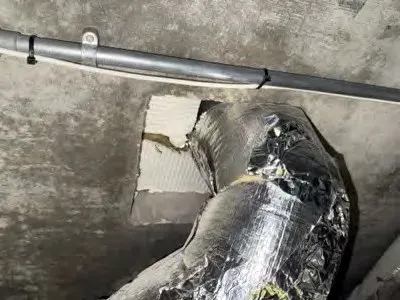
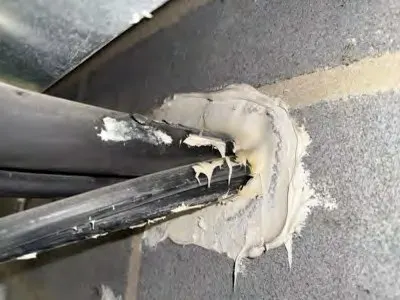
Fire stopping is the sealing of holes in walls and floors that are meant to hold back a fire. In a block of flats each flat is its own compartment, and so is each stair and each riser. The walls and floors between them are built to resist fire for a set time, usually 60 minutes in a typical block. Every pipe, cable or duct that passes through one of those walls makes a hole, and the hole has to be closed with a product that has been tested for that job.
The holes are rarely in plain sight. They are in the risers behind the panels on each landing, above the ceiling tiles in the corridors, in the bin store and the meter cupboards, and in the loft. Broadband installers, plumbers and electricians have usually been through over the years, and each of them has made a new hole or opened up an old one.
What we do in Bristol
The first job is to find the gaps. On a small building this can be a walk round with photos. On a larger one it is a compartmentation survey, carried out floor by floor against the plans, with a numbered photo of each breach.
The fire stopping installation is carried out by our BM TRADA / FIRAS-certificated contractors. Plastic pipes get fire collars or wraps. Roof voids and the spaces above corridor ceilings get cavity barriers. Work that was done by someone else can be checked with a fire stopping inspection, and there is a short guide to the wider subject of passive fire protection.
Bristol buildings and where they leak
Bristol housing is a mix that matters for fire stopping. Victorian terraces in Pennant sandstone, many of them split into flats with timber floors between the flats. Council tower blocks from the 1960s with concrete floors and service risers at the core. Newer blocks around Temple Meads and the harbourside with plasterboard partition walls between the flats and the corridors. Each type fails in its own way. In the timber floors the gaps are around soil pipes and old gas pipes under the floorboards. In the concrete blocks they are in the risers. In the newer blocks they are often at the head of plasterboard walls, where the wall meets the slab above and the gap was left for movement.
Fire stopping jobs usually start at around £2,000 plus VAT. A compartmentation survey is priced after we have seen the plans and know how many floors and stair cores there are. We send a written price before any work starts. Most enquiries come from managing agents whose fire risk assessment lists breaches in compartmentation, from freeholders of converted houses and office blocks, and from schools after new data cabling has gone in. The fire and rescue service for Bristol is Avon Fire and Rescue Service, and some enquiries follow a visit from them.
Fire stopping in Bristol
How it works
- 1Send the detailsThe postcode, the type of building and a photo or two of the gaps.
- 2Survey and written priceWe walk the building, record each breach and price the sealing.
- 3Sealed and recordedEach seal is fixed, labelled and photographed for your fire safety file.
Where we go
Our BM TRADA / FIRAS-certificated contractors cover Bristol and the towns around it. Each page says what we tend to find in that kind of building.
Send us the postcode, the number of floors and the page of the assessment that mentions it. We come back with what it needs and a written price.